Prestigious wine estates for sale in Podensac
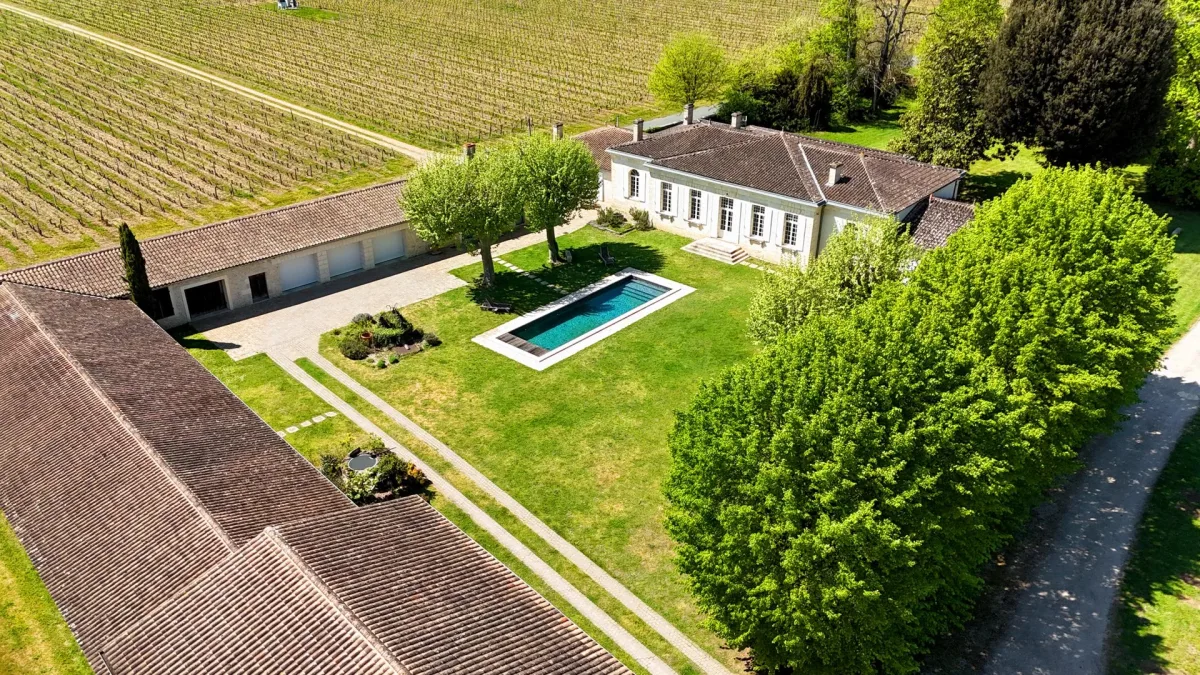
Luxury Wine Estates for Sale in Podensac : Exceptional Bordeaux Vineyard Properties
Buying a luxury wine estate in Podensac means acquiring a property in the heart of one of southern Gironde's historic wine-growing areas. Located on the banks of the Garonne, approximately 30 kilometres southeast of Bordeaux, Podensac occupies a distinctive position within the Bordeaux wine region. The town is closely associated with the Graves appellation, while the surrounding countryside extends towards Cérons, Cadillac, Barsac and Sauternes.
For an international buyer searching for a Bordeaux vineyard property for sale, Podensac offers an appealing combination of wine heritage, countryside, accessibility and residential potential.
A truly exceptional wine estate, however, is far more than a collection of vineyard parcels. Terroir, architecture, the main residence, wine-making facilities, landscaped grounds, the vineyard's reputation and the overall potential of the property all need to be considered together.
Podensac and the identity of the Graves wine region
Podensac is closely associated with the Graves wine appellation, one of the historic wine-producing areas south of Bordeaux.
The name Graves refers to the region's distinctive gravelly soils, which can retain heat during the day and contribute to the characteristics of the wines. The Garonne also plays an important role in the area's local climate. According to France's official appellation authority, INAO, Graves is the southernmost wine region of Gironde and stretches from Bordeaux towards Langon.
This gives Podensac a genuine connection with the Bordeaux wine country and makes the area relevant to buyers looking for a private vineyard estate in the South-West of France.
The market is nevertheless different from the highly publicised prime château markets of the Médoc or Right Bank. Podensac's appeal lies more in the combination of terroir, heritage, landscape and accessibility, particularly when a vineyard is associated with a substantial residence or historic property.
Between Graves and the sweet-wine appellations
One of Podensac's defining characteristics is its geographical position.
Northwards, the vineyards lead towards the Graves and, closer to Bordeaux, Pessac-Léognan. Southwards, the landscape transitions towards Cérons, Barsac and Sauternes, while the vineyards around Cadillac and the Côtes de Bordeaux lie across the Garonne.
For an international purchaser, this creates an interesting setting in which to own a French wine estate near Bordeaux, surrounded by several of the region's historic appellations.
The attraction is therefore not necessarily based on a single famous appellation. Instead, the location provides access to a remarkably rich wine landscape while remaining sufficiently close to Bordeaux to make the property suitable as a primary residence, second home or family retreat.
The Graves terroir
Understanding the potential value of a vineyard estate in Podensac requires an appreciation of the Graves terroir.
The region's gravelly soils, drainage characteristics and ability to store and release heat contribute to the identity of the appellation. Graves produces both red and white wines, with significant differences between individual vineyard locations and soil types.
For a buyer, the precise location of each parcel is therefore essential.
Two estates within the same geographical area may have very different characteristics depending on soil composition, exposure, vineyard age, parcel configuration and the quality of the individual plots.
This distinction becomes particularly important when purchasing a château or manor house with vineyards. The value of the complete estate should never be confused with the value of the agricultural land alone.
Cérons, Barsac and Sauternes nearby
The proximity of Cérons, Barsac and Sauternes adds another dimension to Podensac's appeal.
Barsac is located within the same broader wine-growing area and forms part of the geographical area associated with Sauternes. Its terroir includes limestone formations as well as gravelly soils. The appellation currently covers approximately 660 hectares.
Sauternes lies within the same wider landscape. The appellation covers five communes — Barsac, Bommes, Fargues, Preignac and Sauternes — around the Ciron and Garonne rivers. Its identity is closely associated with hand harvesting and successive sorting of grapes affected by noble rot, or botrytis cinerea.
For an international buyer, this proximity places Podensac within the broader Bordeaux wine country, while preserving relatively direct access to Bordeaux itself.
What type of wine estate can buyers find in Podensac?
A range of acquisition profiles can potentially be found in the local market.
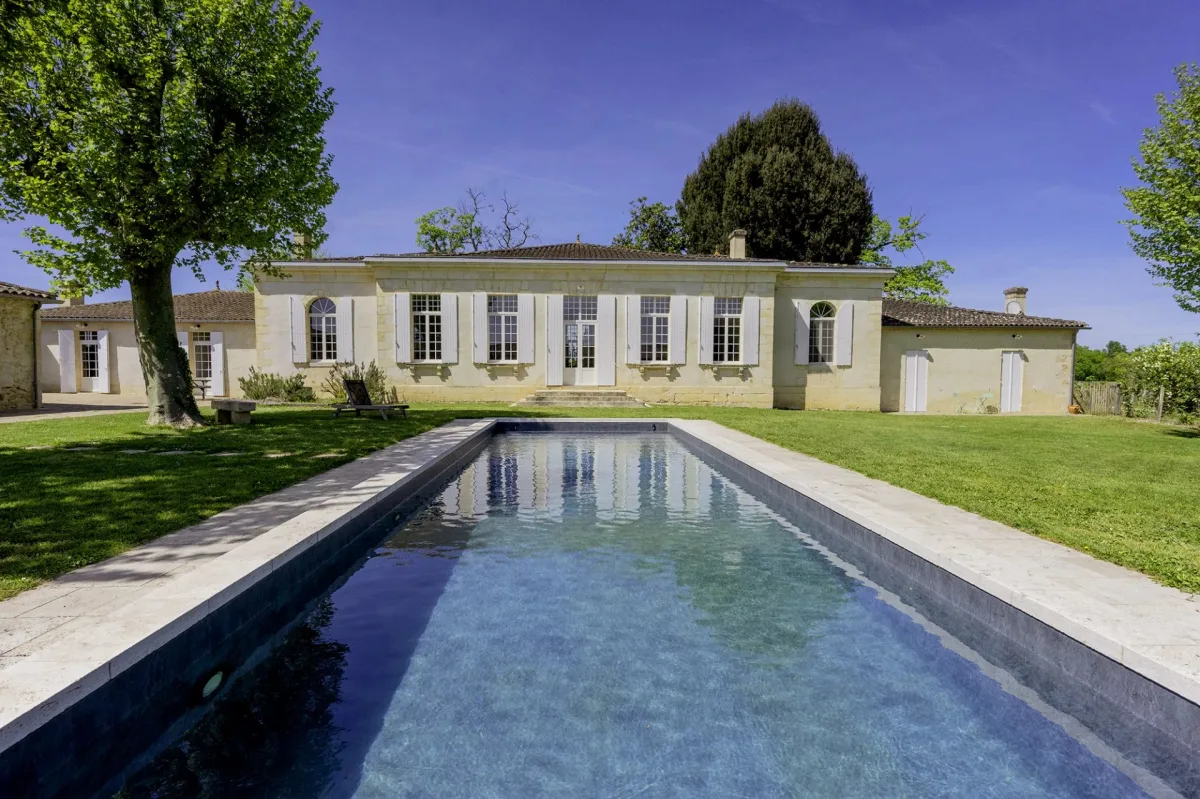
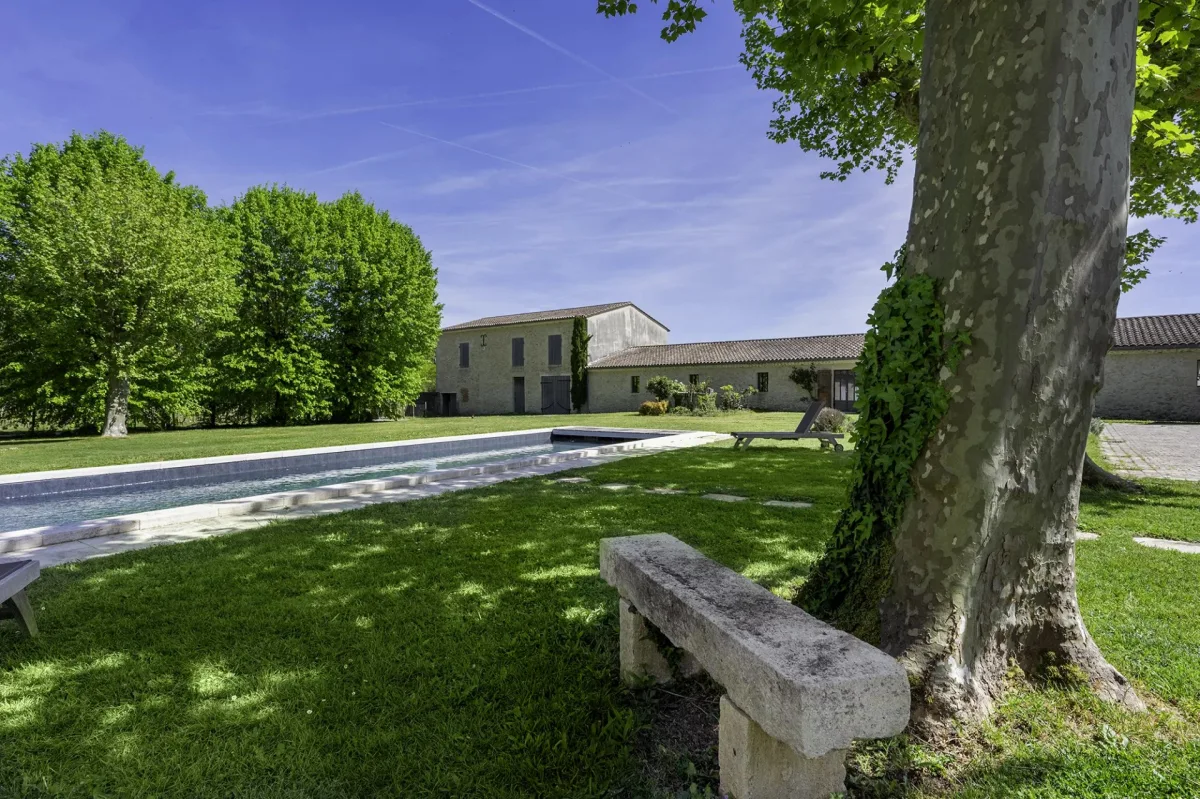
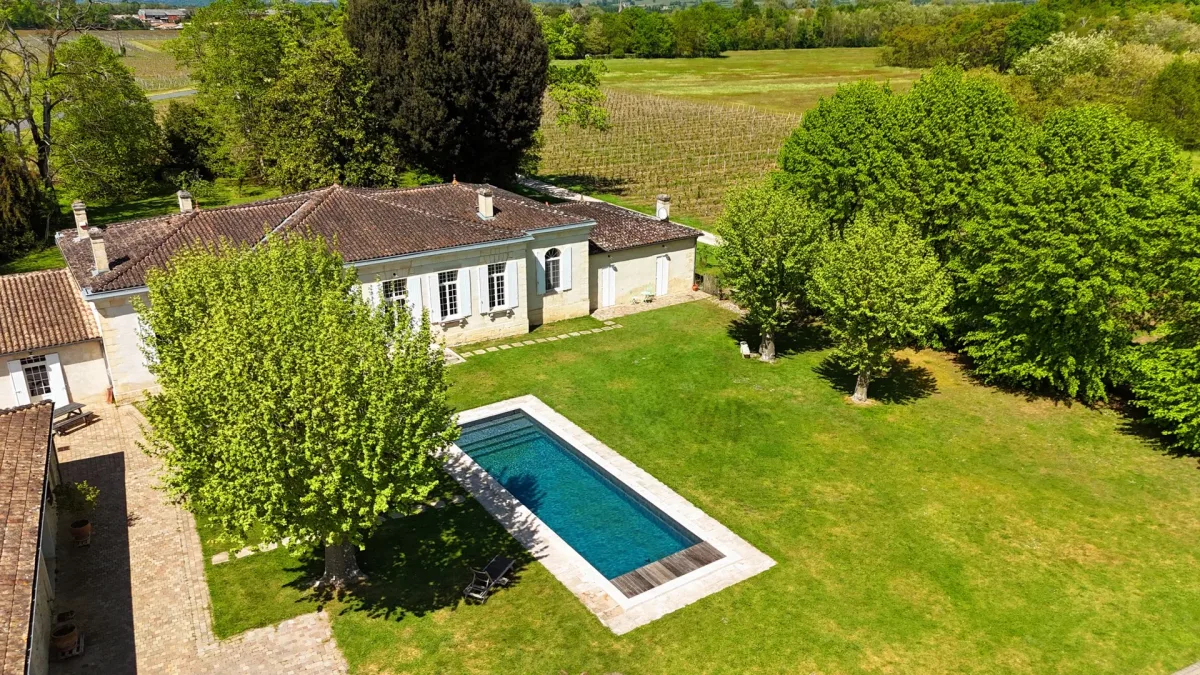
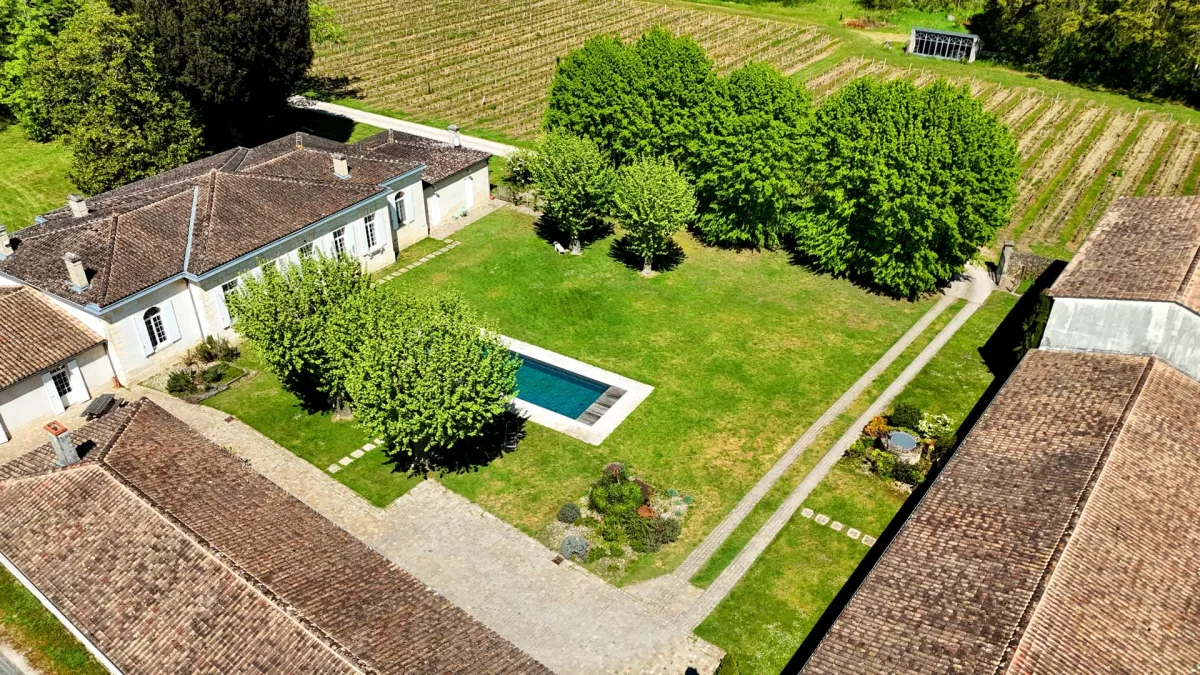
One possibility is a historic French wine estate surrounded by vineyards, with a landscaped park, outbuildings and wine-production facilities. Such a property may appeal primarily to a buyer seeking a private residence with a vineyard attached.
Another profile is a more operational estate, comprising a coherent vineyard, wine cellar, fermentation facilities, storage areas and agricultural buildings designed around commercial wine production.
Between these two extremes are properties that may suit a family heritage project, a luxury second home in the Bordeaux region, an investment in an existing wine operation or a hospitality and wine-tourism concept.
The presence of an elegant manor house or château can substantially alter the character of the acquisition. A historic residence set within mature grounds should not be compared directly with a purely agricultural vineyard holding.
A wine estate cannot be valued simply by the hectare
Available Bordeaux market data illustrate why vineyard values must be interpreted carefully.
According to Safer's 2024 market analysis, dominant vineyard values varied considerably between Gironde appellations: approximately €28,000 per hectare for Sauternes, €450,000 per hectare for Pessac-Léognan and €250,000 per hectare for Saint-Émilion, while the finest terroirs in certain appellations reached substantially higher levels.
These figures do not constitute a valuation of a complete wine estate in Podensac. They illustrate the enormous variation in Bordeaux vineyard land.
For an entire estate, an international buyer must also consider:
the total vineyard area and quality;
the appellation of each parcel;
soil composition and terroir;
vine age and condition;
parcel configuration;
the main residence;
architectural and historical value;
wine cellars and production facilities;
agricultural buildings;
equipment included in the sale;
wine stocks;
the estate's brand and reputation;
existing distribution channels;
hospitality or wine-tourism potential;
future development possibilities.
For a genuinely high-end property, the architectural and residential component may represent a substantial proportion of the total acquisition value.
A lifestyle between vineyards and the Garonne
Podensac's appeal extends beyond viticulture.
The town sits within the characteristic landscape of southern Gironde, shaped by the Garonne, vineyards and surrounding wine-producing villages. For an owner, this creates the possibility of combining the privacy of a French vineyard estate with relatively convenient access to Bordeaux.
This can be particularly attractive to buyers looking for a Bordeaux second home, a private French country residence or a family property where wine, architecture and outdoor living form part of the same lifestyle.
A well-positioned estate can become much more than a working vineyard: it can provide a private residence, landscaped grounds, entertaining areas, wine-tasting spaces and a strong connection with the Bordeaux wine heritage.
A discreet setting for a heritage property
Podensac may also appeal to buyers seeking a wine estate in a less internationally publicised location while remaining within one of France's most important wine regions.
This relative discretion can be attractive to purchasers who value privacy, space and authenticity rather than simply acquiring a property because of the international profile of its appellation.
The market nevertheless requires careful property-by-property analysis. The rarity of a truly exceptional estate, the quality of its vineyard parcels and the condition of its buildings can create substantial differences between properties that may initially appear comparable.
Buying a luxury wine estate in Podensac
A luxury wine estate for sale in Podensac can combine several forms of value within a single property: a Bordeaux vineyard, an elegant French residence, landscaped grounds and an established wine-growing environment.
Its position within the Graves region, close to Cérons, Barsac, Sauternes and Cadillac, gives Podensac a distinctive place within the Bordeaux wine landscape.
For an international buyer looking for an exceptional property, the key is therefore to look beyond the size of the vineyard and assess the estate as a whole: terroir, architecture, grounds, wine-making facilities, history, setting and potential use.
This combination can transform a vineyard property in Podensac into a distinctive piece of Bordeaux heritage — suitable for a family residence, a private second home, a working wine estate or a discreet luxury acquisition in one of France's most celebrated wine regions.